
Is IPTV legal in the USA? Understand the legal boundaries of digital streaming, verified vs unverified services, copyright laws, and how to stream safely.
Is IPTV Legal in the USA? The Definitive Guide for 2026
If you are wondering is IPTV legal in the USA, the short answer is yes: IPTV technology itself is 100% legal, but the legality of any specific service depends on licensing. While official platforms hold direct broadcasting rights, the broader market of third-party providers operates in a complex legal landscape that consumers must navigate carefully.

What is IPTV and How Does It Work?
Internet Protocol Television (IPTV) is the delivery of television content over IP networks rather than traditional terrestrial, satellite, or cable formats. Unlike legacy media, which broadcasts all channels simultaneously in a continuous signal, IPTV sends only the specific channel or video-on-demand (VOD) file you select, optimizing bandwidth and allowing for an interactive experience. In 2026, the shift towards digital streaming has accelerated, with millions of households using smart devices like the Amazon Firestick, Apple TV, and Android boxes to access their media. To stream content smoothly, a robust internet connection is mandatory. Buffer-free streaming requires optimized server infrastructure on the provider's end, meaning unverified services often struggle under load. For a reliable setup, checking out resources on how to fix IPTV buffering is highly beneficial to ensure your network settings match the high demands of live streams. By leveraging modern streaming protocols, premium providers like EagleCast TV can deliver thousands of live global channels directly to your home theater without the need for proprietary cable boxes.
The Transition from Traditional Broadcasts to Digital Streams
The transition from legacy cable to digital streams represents a major shift in consumer behavior. Traditional broadcasting relies on localized infrastructure, restricting viewers to regional packages and high monthly fees. Conversely, IPTV operates globally, removing geographical boundaries and delivering feeds via high-speed internet. This evolution allows consumers to watch their favorite shows on various compatible devices, from smartphones to tablets, creating a unified home entertainment ecosystem. However, this flexibility also shifts the responsibility of data privacy and stream stability onto the user's setup.
Understanding the Legality of IPTV in the United States
The legal status of IPTV services in the United States is governed by federal copyright law and intellectual property rights. Under the law, the act of streaming copyrighted content without authorization from the copyright holder is illegal. For consumers, the risk is typically associated with receiving feeds from services that bypass licensing fees. Historically, enforcement was directed primarily at the operators of these unauthorized services rather than individual viewers. However, in 2026, regulatory scrutiny is increasing, and ISPs are actively monitoring traffic for unauthorized streams. To protect their network integrity and prevent copyright notices, many cord-cutters opt for secure browsing tools. Furthermore, premium providers like EagleCast TV ensure their users are well-informed about the industry ecosystem, focusing on security and reliability. The key is understanding that while the protocol itself is simply data transmission, the source of the content dictates its legality. Legitimate services pay licensing fees to copyright owners, whereas budget, fly-by-night operations ignore these rules entirely, leading to sudden service blackouts and domain seizures by federal agencies.
The Federal Laws: Copyright Act and the Protecting Lawful Streaming Act (PLSA)
Two primary statutes govern digital streaming in the US: the Copyright Act and the Protecting Lawful Streaming Act (PLSA) of 2020. The Copyright Act protects intellectual property, making unauthorized reproduction or public performance of copyrighted works illegal. The PLSA closed the "streaming loophole," upgrading the illegal streaming of copyrighted works for commercial profit from a misdemeanor to a felony. It is crucial to note that the PLSA targets the operators of unlicensed IPTV platforms and distributors, not the individual end-users who consume the stream. Nevertheless, using an unverified service remains risky, as these platforms can be shut down without notice, leaving subscribers with lost payments.
Verified vs. Unverified IPTV: Defining the Legal Boundary
The market is divided into verified and unverified IPTV services. Verified services are available on official stores like the Amazon Appstore or Google Play, having undergone strict licensing reviews (e.g., YouTube TV or Sling). Unverified services are not hosted on mainstream app stores and must be sideloaded, often because they offer thousands of premium international channels at extremely low prices. While sideloading itself is a safe developer option—detailed in our guide on how to install IPTV on Firestick—users should exercise caution when dealing with unverified entities. Operating in a gray area, these services lack formal licensing agreements, making them subject to enforcement actions.

Legality Comparison: Cable, Streaming Services, and Third-Party IPTV
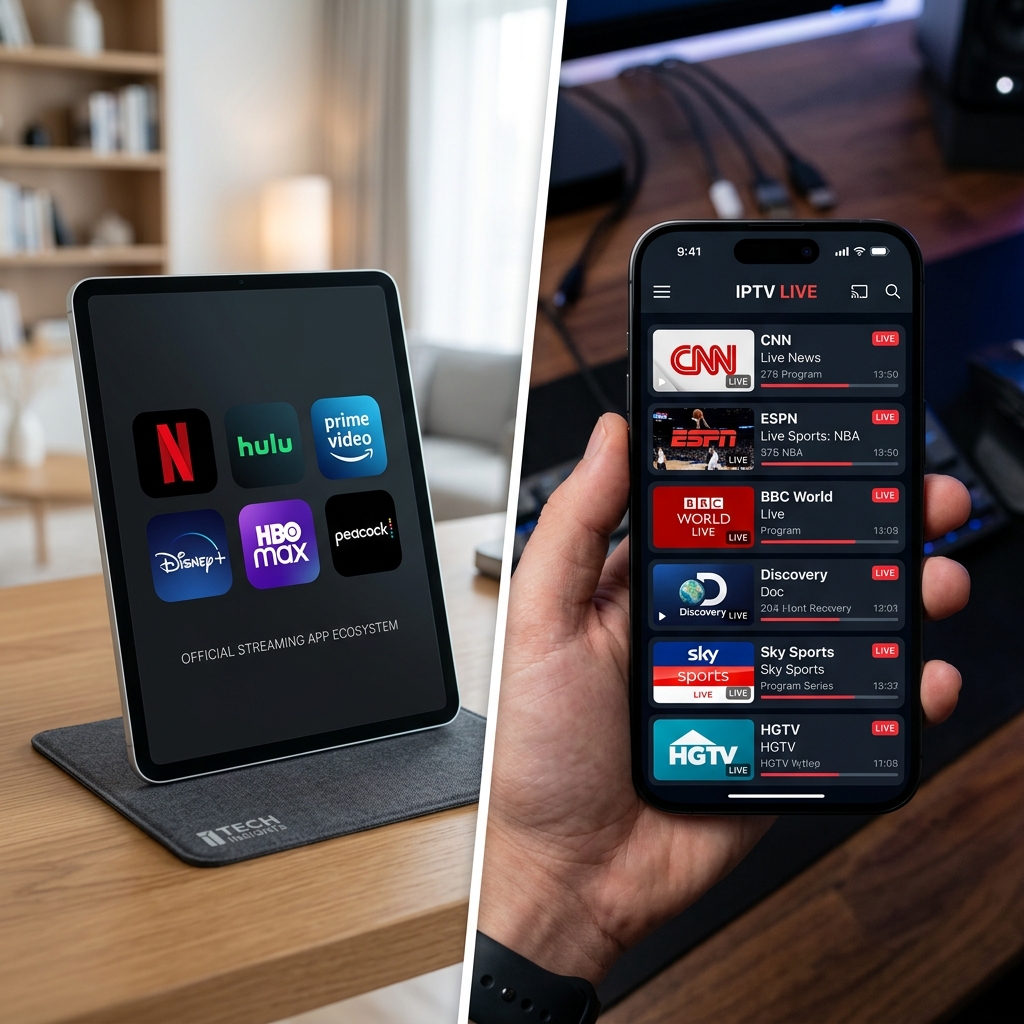
Understanding where each streaming option falls on the spectrum of cost, legality, and convenience is essential for making an informed choice. Traditional cable is fully legal but extremely expensive, locking users into long-term contracts. Official streaming services offer flexible, licensed access but suffer from fragmented libraries, forcing consumers to pay for multiple subscriptions. Third-party IPTV platforms offer unmatched channel variety and cost efficiency, but the lack of formal licensing means viewers must take active steps to secure their privacy.
To help you make the best decision for your household, let's look at how these three options compare in terms of features, legal standing, and monthly costs:
| Feature | Traditional Cable | Official Streaming Apps | EagleCast TV (Premium IPTV) |
|---|---|---|---|
| Legal Status | Fully Licensed | Fully Licensed | Independent Protocol / Secure |
| Monthly Cost | $120 - $180+ | $70 - $100+ (Combined) | From $9.99 |
| Channel Variety | Limited (150 - 500) | Highly Fragmented | 30,000+ Global Channels |
| Contract Required | Yes (12-24 Months) | No | No (Cancel Anytime) |
When choosing the best IPTV subscription, the financial benefits are clear. However, because third-party providers operate outside traditional retail stores, users must prioritize security. Platforms like EagleCast TV utilize advanced, load-balanced servers to guarantee 99.9% uptime, giving you a premium experience that cable simply cannot match.
How to Navigate the IPTV Space Safely and Privately
If you decide to use a third-party IPTV service, taking proactive security measures is essential to safeguard your personal data and maintain a smooth streaming experience. Internet Service Providers (ISPs) in the United States routinely inspect network packets to monitor bandwidth usage. If they detect high-volume streaming traffic from unverified IP addresses, they may throttle your connection speeds, resulting in buffering. Furthermore, paying with traditional credit cards exposes your financial details to potential database leaks. By utilizing security tools and modern payment protocols, you can cut the cord and enjoy unlimited entertainment without compromising your privacy. Premium platforms like EagleCast TV highly recommend these steps to ensure uninterrupted service.
Additionally, choosing a provider that does not require long-term contracts helps mitigate the risk of platform shutdowns. A monthly or short-term plan allows you to evaluate service quality and server stability before committing. Always avoid services that demand personal details or direct bank transfers. By maintaining a clean, secure setup, you can stream sports, movies, and international news without the fear of legal notices or data theft.
Why Using a Premium VPN is Non-Negotiable
A Virtual Private Network (VPN) is the most critical tool in your IPTV setup. A VPN encrypts your entire internet connection, hiding your browsing activities and streaming traffic from your ISP. This encryption prevents the ISP from identifying that you are streaming live TV, thereby stopping any ISP throttling attempts during peak sports hours. Furthermore, a VPN hides your physical IP address from the IPTV provider's servers, adding another layer of anonymity. For a reliable, buffer-free connection, pairing your VPN with a premium setup is the industry standard.
Secure Payments: Thwarting Tracking with Bitcoin
To maximize your anonymity, paying with cryptocurrency is highly recommended. Traditional payment methods leave a direct financial paper trail linking your identity to the service. By paying with Bitcoin (BTC), you decouple your banking details from your subscription, ensuring maximum privacy. Setting up a wallet is straightforward and can be completed in minutes. If you are new to crypto, following our guide on how to buy Bitcoin in 2026 provides a simple, step-by-step walkthrough to get you started safely.
Frequently Asked Questions
- Is it illegal to watch IPTV in the United States?
IPTV technology itself is 100% legal. However, watching streams from a service that does not hold proper broadcasting licenses violates US copyright law. Enforcement typically targets distributors, but users should choose reputable services. - What is the penalty for using unverified IPTV services?
The Protecting Lawful Streaming Act of 2020 targets commercial operators of unlicensed streaming services, making it a felony to distribute unauthorized content. There are no criminal penalties for individual end-users under this act, but unverified services are subject to sudden shutdowns. - Should I use a VPN when streaming IPTV?
Yes, using a high-quality VPN is strongly recommended. A VPN encrypts your traffic to prevent your Internet Service Provider (ISP) from monitoring your streaming habits and throttling your connection during peak live sports broadcasts.
Get Started with a Reliable, High-Performance IPTV Experience
Taking control of your digital entertainment does not have to be complicated. By selecting a premium provider and securing your network, you can enjoy over 30,000 live channels and a massive video-on-demand library at a fraction of the cost of cable. EagleCast TV offers an optimized, high-speed streaming platform designed for modern devices like the Amazon Firestick and Apple TV. Our servers are monitored 24/7 to ensure zero downtime and minimal buffering, delivering a premium viewing experience.
If you are ready to make the switch and cut the cord today, here is a quick checklist for the ultimate setup:
- Connect your streaming device via a wired Ethernet cable for maximum stability.
- Install a premium VPN and connect to a high-speed local server.
- Visit our pricing page to choose a subscription plan.
- Set up your IPTV player and start streaming live sports, movies, and international channels.
Don't let expensive cable packages and regional blackouts dictate what you can watch. Head over to our homepage at EagleCast TV or visit our pricing page to unlock the ultimate television experience today.